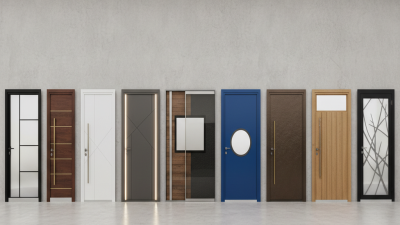
China Top Residential Entry Doors Manufacturers?

Choosing among China’s top residential entry doors manufacturers requires more than comparing catalog prices. A front door must balance security, weather resistance, thermal performance, appearance, and installation compatibility. This guide introduces leading Chinese manufacturers and explains how their product strengths differ across steel, aluminum, stainless steel, fiberglass, and solid wood doors.

Experienced buyers often inspect more than polished showroom images. They request factory videos, material specifications, finish samples, test reports, and references from comparable projects. A useful evaluation also considers frame construction, hinge quality, locking systems, glazing options, threshold design, and packaging. Coastal installations may need stronger corrosion resistance, while colder regions demand better insulation and tighter weather seals. Small details matter. A poorly fitted threshold can undermine an otherwise excellent door.

Reliable manufacturers should communicate clearly about customization, production lead times, quality control, and after-sales support. Certifications and test documents must be verified for the intended market, not accepted blindly. Factory capability matters too, especially when a project requires unusual dimensions, matching side panels, or consistent finishes across multiple units. Some suppliers look impressive online but provide limited technical guidance after payment. That deserves careful reflection.

This overview is designed to help architects, contractors, distributors, and homeowners create a practical shortlist. It does not treat any manufacturer as perfect. Instead, it encourages evidence-based comparisons, sample approval, and independent inspection before shipment. The best residential entry doors manufacturer is not always the cheapest or most famous. It is the supplier that delivers suitable performance, dependable communication, and repeatable quality for the project’s real conditions.
China Top Residential Entry Doors Manufacturers?

China Residential Entry Doors: 2024 NBS Housing Demand Indicators

China Top Residential Entry Doors Manufacturers?

China Residential Entry Doors: 2024 NBS Housing Demand Indicators

China’s 2024 housing data points to a cautious residential entry door market. The National Bureau of Statistics reported 973.85 million square meters of commercial housing sold, down 12.9% year on year. Residential sales weakened as well. New housing starts fell sharply, declining 23.0% to about 739 million square meters. These figures suggest slower demand for doors in newly built apartments and suburban developments.

Manufacturers should therefore study replacement demand, not only new construction. Completed housing also decreased, which may delay installation schedules and contractor payments. However, occupied homes still need safer, quieter, and better insulated entrances. In practice, buyers often compare steel thickness, fire performance, weather seals, hinges, locks, and installation support. A door displayed beside a dusty construction entrance can reveal more than a polished catalogue.

Reliable sourcing requires evidence. Buyers should request test reports, production records, dimensional tolerances, coating specifications, and warranty terms. Factory visits can confirm whether assembly lines match claimed capacity. Export experience matters, but local code compliance remains essential. A low price may hide weak sealing or inconsistent hardware. That is not always obvious during inspection.

NBS indicators are valuable, but they do not measure every renovation or replacement project. This is where market interpretation becomes imperfect. Manufacturers serving China’s residential sector may need smaller batches, flexible designs, and stronger after-sales teams. Demand is slower, yet quality-focused opportunities remain visible in occupied communities and refurbishment projects.

China Residential Entry Doors: 2024 NBS Housing Demand Indicators

Urban population growth and urbanization indicate the expanding addressable market for residential entry doors in China.

China's urban population increased from 902.0 million in 2020 to 943.5 million in 2024, while the urbanization rate rose from 63.89% to 67.00%. These indicators support continued demand for new and replacement residential entrance doors, although they do not represent door sales or manufacturer performance.

Source: National Bureau of Statistics of China, annual population and urbanization data, 2020–2024.

Standards: GB 17565 Security Grades, GB 12955 Fire Ratings, and U-Values

China Top Residential Entry Doors Manufacturers?

When evaluating Chinese residential entry door manufacturers, standards should guide the shortlist. GB 17565 covers security performance, including door structure, locks, hinges, and resistance testing. Do not judge security by steel thickness alone. Ask for the tested grade, complete test report, and production consistency. A showroom sample may look strong, yet installation gaps can weaken real protection.

GB 12955 defines fire-door performance through fire integrity and insulation tests. Ratings such as A, B, and C indicate different resistance levels and must match the building’s design requirements. Request reports from qualified laboratories, not only marketing sheets. Also compare the door’s U-value, which measures heat transfer. Lower values usually improve indoor comfort and reduce energy loss. However, glass panels, frames, seals, and poor installation can raise the actual result. Paper performance is not everything.

Tips: Ask for current certificates, test methods, and report numbers. Check whether the tested size matches your order. Inspect gasket compression and frame alignment during installation. Small details matter. A careful factory should explain limitations clearly, although some documentation may still need independent verification. Suppliers that welcome third-party inspection are generally easier to assess and more reliable for long-term projects.

Manufacturer Ranking: Capacity, Defect Rate, Lead Time, MOQ, and HS 730830 Data

China Top Residential Entry Doors Manufacturers?

Manufacturer Ranking: Capacity, Defect Rate, Lead Time, MOQ, and HS 730830 Data

A reliable ranking should measure factory performance, not advertising language. Capacity needs verified production lines, monthly output, and current utilization. A large workshop may still deliver slowly during peak seasons. Defect rate should come from pre-shipment inspections, including weld marks, coating flaws, lock alignment, and dimensional errors. Supplier claims alone are weak evidence.

Lead time affects project schedules. Record the time from approved drawings to container loading, including sample approval and hardware sourcing. Standard doors may ship within several weeks, while custom finishes require longer. MOQ also deserves careful review. Some manufacturers accept small trial orders, but special colors, glass, or oversized panels can raise the minimum. Ask for written terms.

HS 730830 customs data can show export activity for iron or steel doors, frames, and thresholds. However, declarations may combine different product types, duplicate shipments, or reflect trading companies. Treat the data as a verification signal, not final proof. Compare shipment frequency with factory capacity and inspection results. A practical ranking should weight quality and delivery consistency more heavily than export volume. That approach is less impressive on paper, but more useful for buyers. One weakness remains: defect data can change by batch, inspector, and production season. Recheck it before signing a large order.

Product Comparison: Steel, Aluminum, Wood, and Composite Door Performance

China Top Residential Entry Doors Manufacturers?

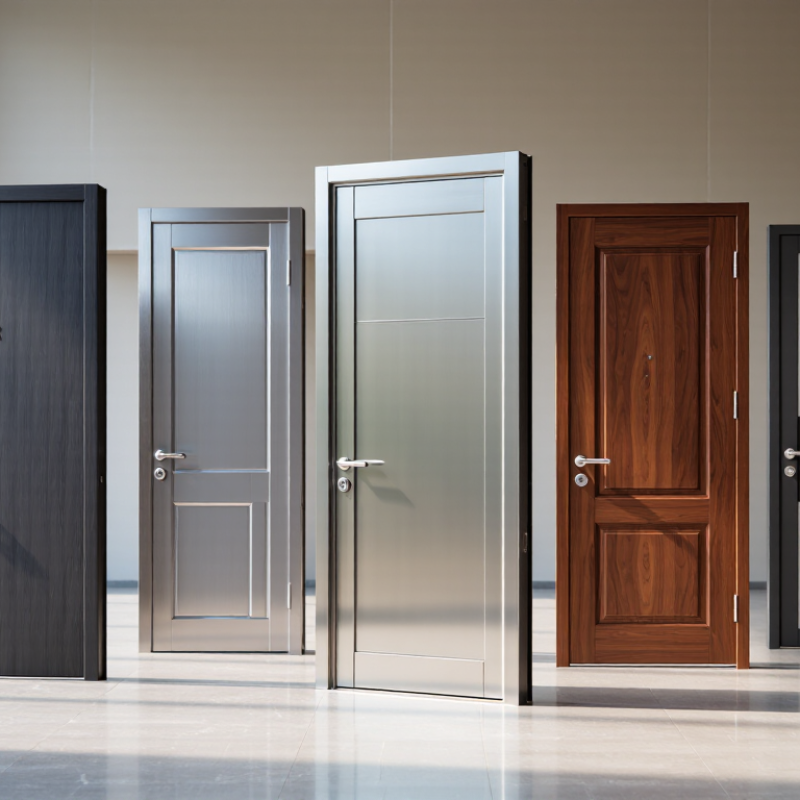
For Chinese residential entry-door manufacturers, material choice should follow tested performance, not appearance alone. Steel doors usually provide strong security and stable dimensions. However, unbroken steel frames can create thermal bridges. The U.S. Department of Energy reports that insulated steel and fiberglass doors commonly reach about R-5 to R-6, while basic wood doors perform less consistently.

Aluminum doors are lightweight and resist corrosion, but their thermal performance depends heavily on polyamide breaks and insulated cores. The National Fenestration Rating Council evaluates U-factor, solar heat gain, visible transmittance, and air leakage. A lower U-factor generally indicates better insulation. Yet, a low panel rating can lose value through a poorly sealed threshold.

Small gaps matter.

Wood offers natural insulation and a warmer surface. It also needs careful moisture protection, especially near wet entrances. Composite doors reduce swelling and often provide more stable performance than solid wood.

WDMA standards emphasize construction quality, moisture resistance, and finish durability. Manufacturer test reports should identify climate conditions, frame type, and installation method. I would question any report without those details.

Real projects are messier. Door performance can decline after repeated cycling, impact, and seasonal movement. Independent laboratory testing helps, but field inspection still matters.

Buyer Checklist: Certifications, Warranty, Unit Price, and 10-Year TCO

China Top Residential Entry Doors Manufacturers?

A reliable manufacturer should provide more than attractive catalog photos.

Ask for certification documents, test standards, and reports matching your target market. Check fire resistance, wind pressure, water penetration, thermal performance, and formaldehyde limits when relevant.

Certificates must identify the factory, product model, and testing date. A copied logo proves little.

Warranty details need careful reading. Request written coverage for the door slab, frame, hinges, locks, glass, and surface finish.

Ask who pays for replacement shipping and labor. A five-year warranty may exclude coastal corrosion, installation errors, or color fading.

Those exclusions can matter more than the headline number. Keep approved drawings and inspection records.

Compare unit prices on the same basis.

Confirm dimensions, steel or aluminum thickness, insulation core, glazing, hardware, packaging, and delivery terms.

A cheaper quote may omit thresholds or protective film. Build a ten-year total cost of ownership sheet.

Include purchase, freight, installation, energy loss, repainting, seal replacement, lock repairs, and possible replacement.

For example, a door costing 120 dollars less may require two extra service visits and new weather seals. The arithmetic can change quickly.

I would also order one sample before a container shipment. It feels slower, but small defects become expensive when repeated across hundreds of units.

Even experienced buyers can overlook installation conditions.

Door performance depends on the wall opening, drainage, and local climate, not only factory specifications.

Go to Top